
This post is part of the Story Quest series on how to take your book idea and transform it into your first rough draft. If you missed post one on Developing Your Why, don’t forget to check it out.
Outlining, or plotting, your novel is a great way to know the story you are writing before you ever write your first paragraph. Today’s post will focus on how to identify which ideas fit into certain portions of the book. If you don’t have your story idea, please refer to How to Mind Map your novel.
Acts:
The first thing to do is determine if a certain idea falls into
Act 1 (Beginning)
Act 2 (Middle)
Act 3 (End)
When thinking about acts, it helps me to think of a stage play. The first act is all about set ups and letting the viewer/reader in on the crucial details. This is your backstory and what gets the tale we’re reading/viewing into motion. The second act is all the middle bits (your slaps or setbacks). The final act is the climax and the resolution.
Once you have that figured out, then dive deeper into the story structure by using the milestones.
Milestones:
While outlining your novel, you need to make sure your story has certain plot points or major story milestones (aka story beats).
When crafting my outlines, there are six primary milestones that I ensure I hit as go. These are:
1 – Backstory
2 – Inciting Incident
3 – Slap 1 or Major Setback 1
4 – Slap 2 or Major Setback 2 (Depending on your story and genre, it is possible to have a third slap, but most stories only have two major setbacks.
5 – Climax
6 – Resolution
Milestones, or major story beats, are the significant events that propel your story forward. You cannot have a climax if you never set up an inciting incident. The resolution won’t feel earned if we didn’t establish enough backstory and the struggles along the way.
So how do you put the milestones together and where should they occur?
Backstory: This should only take up the first 5-15% of your novel. Keep in mind that less is more and you’ll have the whole novel to give readers all the info they NEED to know. Also, keep this pertinent to the plot of the story. Every aspect you have in your book should propel the story forward in some way. This includes the characters, the setting, and the challenges. EVERYTHING needs to point us toward the climax of the story.
Inciting Incident: This happens in the first 20% of your story. If you go over this amount, your story will have a very slow pacing and will lose the attention of your readers. Again, remember that less is more and the quicker you can drop your readers into the main story, the more they’ll invest in it.
Slap 1: This event is the main character’s first real setback in the story. This is intended to make sure the MC is truly committed to this course of action. It needs to be something serious, but not so bad that it feels like we already hit the climax. The character should be able to find a solution to this problem and still be positive about making it to their goal. This will occur around the 35%-45% mark of your story.
Slap 2: This slap should be tough. It may seem like there is no way they’ll accomplish their goal, but then they’re given a small measure of hope that all will turn out well. This can be in the form of the death of a loved one and they continue to carry the mission forward. (Think of when Moana and Maui fight the lava monster the first time together. They fail, but through the guidance of her grandmother, she is given the courage to try again.) This will occur around the 50%-75%.
Climax: At 75%-95%. Everything has been pointing to this moment. From your backstory through now, this moment needs to have been built up. Let things marinate until all the important questions for this book have been answered.
Resolution: This occurs somewhere at the 95-100% mark. It should tie all the loose ends that pertain to this book up. However, this is also where you leave a small teaser for what comes next with your books. Is it a murder on the last page? A letter? A mysterious arrival? What will make your readers eager for the next book?
How to plot:
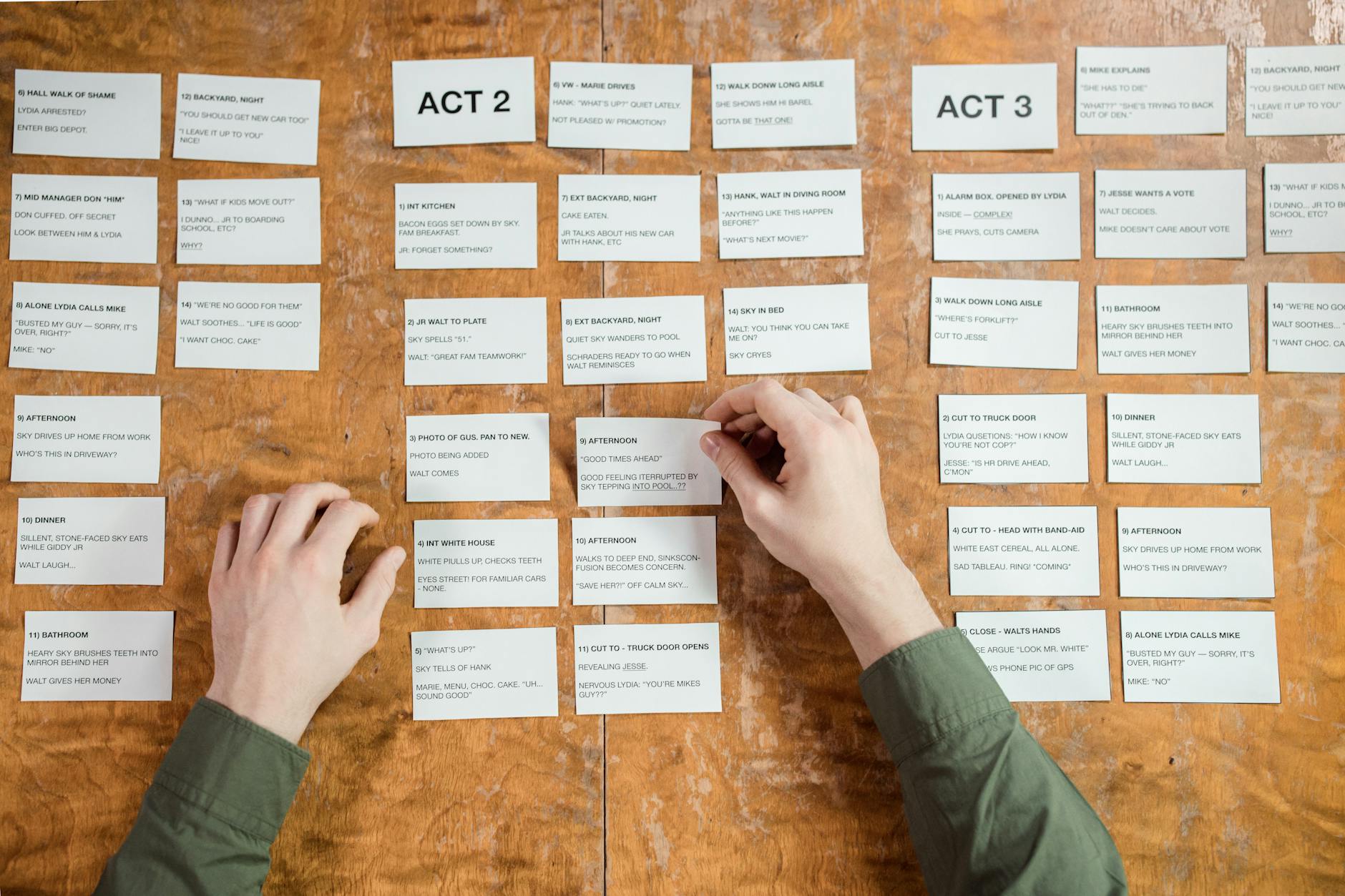
There are several ways to do this phase. Working off your Mind Map, you can either hand write your outline and group ideas that flow together under the Acts and Milestones headings.
You can also do this on a computer. This makes it easier to move items around, but I feel like writing them with your hand makes the story ideas stick in your mind better and allows you to really see what connects and what doesn’t.
My favorite way to put together my rough outline, however, is by using a variety of sticky notes and a roll of masking tape.
On an empty wall, place a line of tape (about 4 feet long) in a straight horizontal line. Write your story milestones on the tape at intervals. (You can write numbers 1-6 or you can write the name of each milestone on the tape.)
When that is done, choose one color of sticky notes and write all your major plot points and place them on your tape line where you think they go. This will help you get a better idea of how your story fits together. Add any extra thoughts that come to your mind as you do this.
On a different color of sticky note, write the names of all your major characters and place them where you think they will first appear in the story.
Take a third color and write the various settings we will encounter in your story and place those where we will see them first.
Once done, stare at your timeline for a few days and see if you want to move anything around. See if new ideas come up and place them where they should go.
When you are satisfied with the order of your story, this is where I recommend taking it to paper, again writing it by hand in bullet point form. Leave white space around your bullet points so you can continue to fill in details as they come to you.
This is your completed Rough Outline of your story. In the next post, we will fill in more details and filling some of the larger plot holes.
Take care!

Vanessa Thurgood
Vanessa is the award winning author of the clean, young adult epic fantasy series, THE COMSTOCK CHRONICLES.
Currently, Vanessa is wandering the desert with the last novel in The Comstock Chronicles, The Phoenix and the Wolf, releasing fall 2025.
